
Website Design
Web Design
There is more to building a website than just creating the pages. Anyone can create the pages but it takes a seasoned expert to create amazing content that will resonate with your clients. The goal of any website is to generate revenue and to build a loyal customer base. This is only done by building trust and authority with your clients and customers. In a nutshell it means creating a valuable resource for those that do business with you. Becoming a trusted resource takes time and effort.
After creating creative keyword focused content it is important to be able to present the information that is easily absorbed by the reader. Most traffic will be in the form of a mobile device so making your content easy to read and navigate on a mobile device is of the utmost importance. There is a lot of noise and distraction on the Internet so making your website something that people will be able to find solutions to their concerns is just as important as the colors and images that you display.
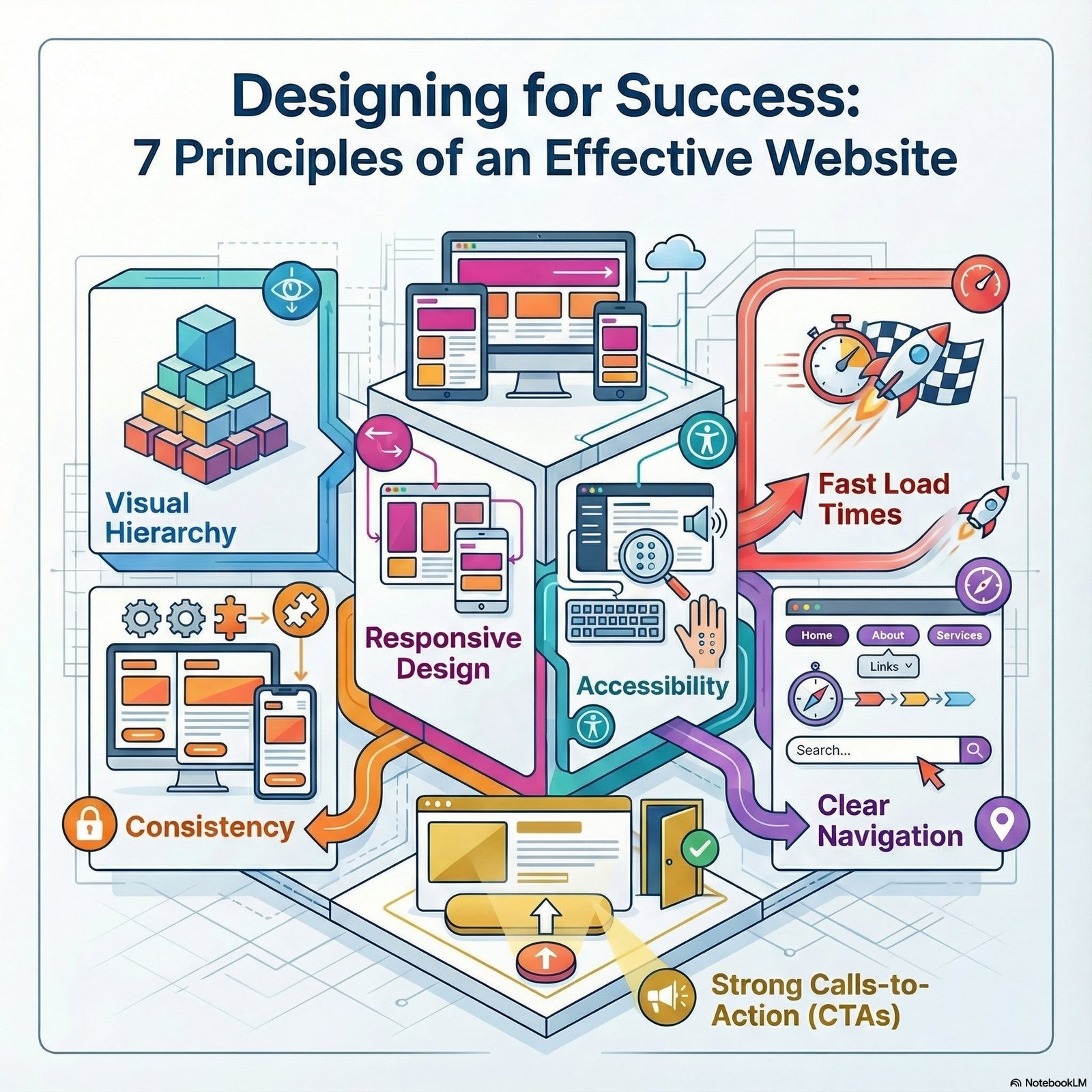
The Principles of Effective Web Design
A website isn’t just how it looks it’s how it performs, communicates, and converts.
A great website balances speed, clarity, accessibility, branding, and strategy. When these elements work together, your site doesn’t just exist online it works for your business 24/7.
1. Speed & Performance ⚡
First impressions happen in under 3 seconds.
Why it matters
Slow sites lose visitors, rankings, and revenue
Speed affects SEO, conversions, and user trust
Best practices
Optimized images (compressed, properly sized)
Clean, lightweight code
Fast, reliable hosting
Caching & performance optimization
Minimal unnecessary scripts and plugins
Goal: Pages load in under 3 seconds on desktop and mobile.
2. Images & Visual Media 🎨
Design should enhance the message—not slow it down.
Why it matters
Visuals influence credibility and emotional connection
Poor images cheapen the brand instantly
Best practices
High-quality, web-optimized images
Consistent visual style and color grading
Proper image formats (WebP, SVG, optimized JPG/PNG)
Strategic use of video (never autoplay chaos)
Visual hierarchy that guides attention
Goal: Visually compelling, fast-loading, brand-aligned media.
3. Accessibility & Usability ♿
Your website should work for everyone.
Why it matters
Expands your audience
Improves SEO
Reduces legal risk
Shows professionalism and care
Best practices
Proper color contrast
Readable fonts and sizes
Keyboard navigation
Alt text for images
Clear labels and form inputs
Mobile-friendly layouts
Goal: A website that’s usable, readable, and inclusive.
4. Branding & Visual Identity 🧠
Your website should feel like your business.
Why it matters
Builds trust instantly
Creates recognition
Separates you from competitors
Best practices
Consistent colors, fonts, and tone
Logo placement that reinforces identity
Clear brand personality (modern, luxury, friendly, bold, etc.)
Unified design across all pages
Goal: A cohesive brand experience from first click to conversion.
5. Content & Messaging ✍️
Design attracts. Content convinces.
Why it matters
Visitors scan before they read
Clear messaging drives action
Best practices
Clear value proposition above the fold
Simple, benefit-driven language
Short paragraphs and scannable sections
Strong calls-to-action (CTAs)
SEO-optimized headings and structure
Goal: Say the right thing, to the right person, at the right moment.
6. Navigation & User Flow 🧭
If users get lost, they leave.
Why it matters
Navigation determines how long visitors stay
Poor structure kills conversions
Best practices
Simple, intuitive menu structure
Logical page hierarchy
Clear pathways to key actions
Sticky headers when appropriate
Minimal clicks to important content
Goal: Visitors always know where they are and where to go next.
Research
Gathering vital information relevant to your customers' needs is crucial for your website to develop a strong strategy and enable confident decision-making. Click Here
Content
Engaging content that draws in your visitors and encourages them to explore more about you and your company. Click here
Development
Developing your website brings it to life with tools designed to engage and interact with your customers and visitors. Click here
Website Hosting
Website hosting is the foundation that powers your website’s speed, security, and reliability. Click here
Marketing 360
Once your website is complete, it's time to unveil it to the world by optimizing your SEO, boosting your offline marketing strategies, and fostering strong engagement across social media platforms. Click here